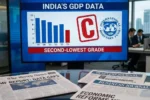
Okay, let’s talk numbers specifically, 7%. That’s the new GDP forecast for India in FY26, bumped up from 6.5%. Now, I know what you might be thinking: “Great, another economic report. Wake me up when it’s interesting.” But here’s the thing: this isn’t just about numbers; it’s about what they represent for you, me, and everyone in India. Let’s dive into why this seemingly small change actually matters.
Why This GDP Forecast Matters To You
Here’s where we get to the “why.” It’s easy to see a headline about economic growth and glaze over. But think about it this way: a higher GDP forecast often translates to more jobs, better incomes, and increased investment in infrastructure. In short, it could mean a tangible improvement in your quality of life. Think about it: A rising tide lifts all boats, right? A stronger economy, fueled by robust growth, provides a conducive environment for businesses to expand. This expansion generates employment opportunities across various sectors, benefiting job seekers and contributing to a reduction in unemployment rates. A common question that arises is, How does the government implement the change? Well, the government plays a crucial role through policy interventions aimed at fostering sustainable growth . These policies include measures to boost investment, streamline regulatory processes, and promote innovation. When the government creates a conducive environment for businesses to thrive, it attracts both domestic and foreign investment, further fueling economic expansion and job creation.
But let’s be honest – numbers can be deceiving. So, let’s cut through the jargon. A significant indicator to observe is the current account deficit , which reflects the net difference between a country’s inflows and outflows of foreign currency. A lower current account deficit signals improved financial stability and external competitiveness.
Here’s where my inner analyst comes out. When you hear “increased GDP forecast,” don’t just think of a percentage. Think of the potential impact on sectors like manufacturing, services, and agriculture. Think of the ripple effect on small businesses and entrepreneurs. The economy’s trajectory has a significant role in the long run.
Decoding the Numbers | Key Indicators and What They Tell Us
Okay, so 7% sounds good, but what’s driving this optimism? It’s a mix of factors. Increased government spending on infrastructure (think roads, railways, and ports), a rebound in private investment, and a growing consumer base are all playing a role. The Reserve Bank of India (RBI) also plays a crucial role, using monetary policy tools to manage inflation and maintain financial stability. Understanding these dynamics gives you a clearer picture of the forces shaping India’s economic landscape .
Let me rephrase that for clarity. This isn’t just about big corporations raking in profits. It’s about creating an environment where small and medium-sized enterprises (SMEs) can flourish, where innovation is rewarded, and where the benefits of growth are shared more equitably. The GDP forecast also takes into account the country’s fiscal deficit , representing the difference between the government’s total revenue and total expenditure. Managing the fiscal deficit is crucial for maintaining macroeconomic stability.
But, and this is a big “but,” these projections are based on certain assumptions. Global economic conditions, geopolitical stability, and commodity prices all play a crucial role. A sudden spike in oil prices, for example, could throw a wrench in the works. And the economic survey is crucial to study these factors.
The Global Context | India’s Growth Story in Comparison
What fascinates me is how India’s growth story stacks up against the rest of the world. While many developed economies are struggling with slow growth and even recession, India stands out as a bright spot. We are among the fastest-growing major economies , and that’s a testament to our resilience and potential.

But let’s not get complacent. We still have a long way to go in terms of reducing poverty, improving healthcare, and ensuring access to quality education for all. The benefits of economic growth need to reach every corner of the country, not just a select few.
One thing I’ve noticed is that people often underestimate the impact of global factors. The Russia-Ukraine conflict, for instance, has had a significant impact on supply chains and energy prices, affecting economies worldwide. India, too, has felt the pinch. So, while we celebrate our growth, we must also be mindful of the challenges that lie ahead.
Challenges and Opportunities | Navigating the Path Ahead
Speaking of challenges, let’s address some of the key hurdles that could derail India’s growth trajectory . Inflation remains a concern, particularly food inflation, which directly impacts household budgets. Infrastructure bottlenecks, bureaucratic delays, and skill gaps also need to be addressed to unlock our full potential.
But here’s the good news: India is a nation of entrepreneurs, innovators, and problem-solvers. We have a young and dynamic workforce, a thriving digital economy, and a government committed to reforms. We are also observing the index of industrial production which is a crucial factor to watch out for.
What excites me most is the potential for technology to transform our economy and improve the lives of millions. From fintech to agritech, Indian startups are disrupting traditional industries and creating new opportunities. The government’s push for digitalization and financial inclusion is also paving the way for a more inclusive and equitable society.
Looking Ahead | What This Means for You
So, what does all this mean for you, the average Indian? It means that there are reasons to be optimistic about the future. It means that your hard work and aspirations have a greater chance of paying off. It means that India is on the right track, but we still have a long journey ahead.
The increase in GDP Growth rate also increases the per capita income , which reflects the average income earned per person in a specific area. An increase in per capita income implies improved living standards and enhanced economic well-being for individuals and households.
The one thing you absolutely must remember is that economic growth is not an end in itself. It’s a means to an end a way to create a better world for ourselves and future generations. It’s about building a society where everyone has the opportunity to thrive, where innovation flourishes, and where progress is sustainable and inclusive.
FAQ Section
Will this GDP increase lead to more jobs?
Generally, yes. Higher GDP often leads to increased investment and business expansion, which creates more job opportunities.
How does the GDP forecast impact the stock market?
A positive GDP forecast usually boosts investor confidence, leading to a rally in the stock market.
What if global economic conditions worsen?
A global slowdown could negatively impact India’s export-oriented sectors and overall growth.
Is this growth sustainable in the long run?
Sustainability depends on factors like environmental protection, social equity, and good governance.
How can I benefit from this economic growth?
Focus on skill development, entrepreneurship, and staying informed about economic trends to seize opportunities.
In conclusion, India’s revised GDP forecast is more than just a number. It’s a sign of our potential, a reflection of our resilience, and a call to action. Let’s work together to build a brighter future for India, one where prosperity is shared by all.
Disclaimer: ऊपर दिए गए विचार और सिफारिशें व्यक्तिगत विश्लेषकों या ब्रोकिंग कंपनियों की हैं, न कि "Finance Ghar" की। हम निवेशकों को सलाह देते हैं कि किसी भी निवेश निर्णय लेने से पहले प्रमाणित विशेषज्ञों से परामर्श करें। निवेश में जोखिम होता है और सही जानकारी के बिना निर्णय लेना हानिकारक हो सकता है।