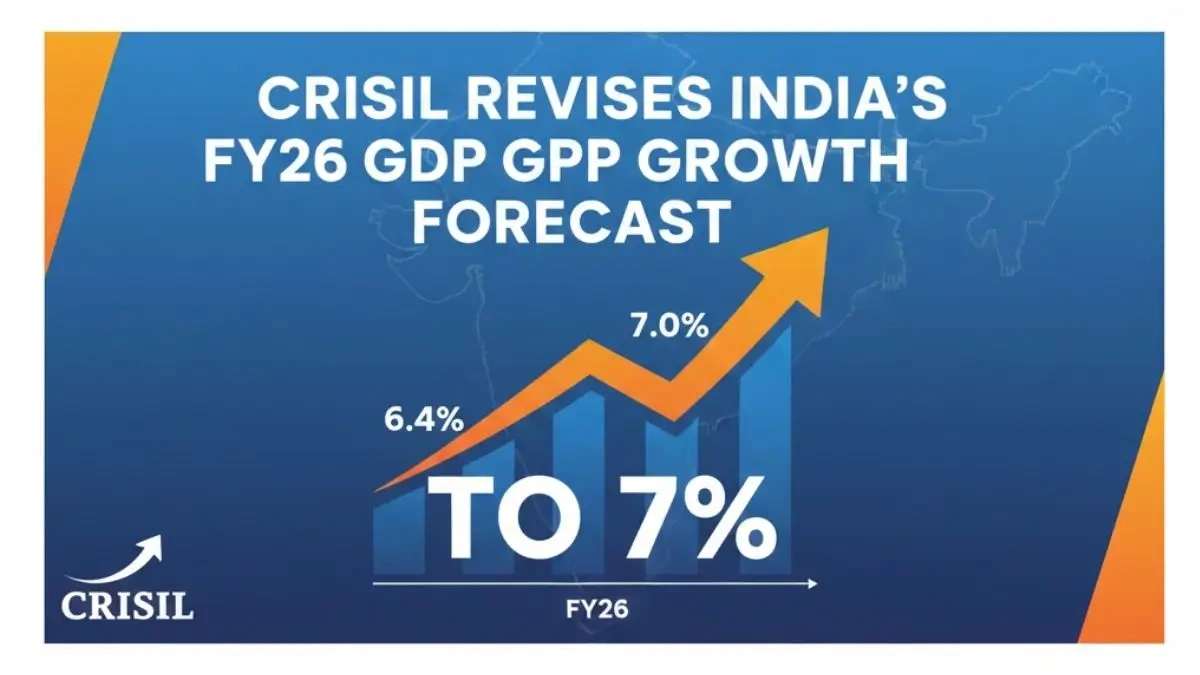
Alright, let’s talk GDP forecast . Crisil, the well-known ratings agency, just bumped up its projection for India’s FY26 GDP growth to a solid 7%. This isn’t just some random number; it’s a statement about where our economy is headed. And honestly, in a world of unpredictable economic winds, a little good news is something we all need, right? But why now? What’s behind this optimistic revision, and what does it really mean for you and me? Let’s dig in, because there’s always more than meets the eye.
Decoding the ‘Why’ | What’s Fueling This Optimism?
So, why the upgrade? It boils down to a robust Q2 performance. But “robust” is a vague term. What specifically made Q2 so impressive? Well, for starters, India’s manufacturing sector has been showing signs of a real resurgence. Government policies aimed at boosting domestic production – like the Production Linked Incentive (PLI) schemes – are finally starting to bear fruit. This investment in manufacturing , combined with a pick-up in consumer demand, has created a positive feedback loop. What fascinates me is how interconnected these factors are; it’s not just one thing pushing the needle, but a confluence of several.
And then there’s the agricultural sector. A decent monsoon season (touch wood!) has boosted rural incomes and, consequently, rural demand. This is crucial, especially in a country where a significant portion of the population still depends on agriculture for their livelihood. But, it’s worth noting, agricultural output is always subject to the whims of the weather gods, and that’s one uncertainty we always need to consider.
The ‘So What?’ Factor | Implications for the Average Indian
Okay, so India’s economic growth is projected to be higher. Big deal, right? Actually, it is. A higher GDP growth forecast generally translates to more jobs, higher incomes, and increased investment. Think about it: businesses are more likely to expand and hire when they’re confident about the future. This can lead to a virtuous cycle of economic prosperity.
However – and this is a big however – the benefits of economic growth are not always evenly distributed. There’s a real risk that the rich get richer while the poor are left behind. That’s why it’s essential to look beyond the headline numbers and examine the quality of growth. Is it inclusive? Is it sustainable? These are the questions we should be asking. According to the World Bank data, the Indian economy needs to create more jobs in the formal sector to truly benefit its burgeoning youth population. As per the guidelines from the Reserve Bank of India , keeping inflation in check is paramount to ensuring sustainable growth.
Navigating the Road Ahead | Challenges and Caveats
Let’s be honest, there are always challenges. Global economic headwinds, geopolitical tensions, and domestic policy bottlenecks could all throw a wrench in the works. One of the biggest concerns is inflation. If inflation spirals out of control, the RBI might be forced to raise interest rates, which could dampen economic activity. It’s a delicate balancing act, and the policymakers have their work cut out for them.

Another key challenge is infrastructure. India needs to invest heavily in improving its infrastructure – roads, ports, railways, and power – to sustain its economic growth momentum. Without adequate infrastructure, businesses will struggle to operate efficiently, and the economy’s potential will remain untapped. A common mistake I see is overlooking the importance of skill development. It is important for continued economic prosperity, but often gets left behind.
The Human Angle | It’s More Than Just Numbers
What fascinates me is the resilience of the Indian spirit. The ability to adapt, innovate, and overcome challenges is what truly sets India apart. I initially thought this was straightforward, but then I realized that it wasn’t about GDP at all, but about real change.
Economic forecasts are not crystal balls. They’re based on assumptions and models, and they’re always subject to revision. What matters most is how we respond to the challenges and opportunities that come our way. How do we ensure that growth is inclusive and sustainable? How do we create a society where everyone has the opportunity to thrive? These are the questions that should be driving our conversations.
A rising GDP forecast isn’t just about numbers; it’s about hope, opportunity, and the promise of a better future. But let’s not get carried away. Let’s remain grounded, realistic, and focused on the things that truly matter. Let’s keep asking the tough questions, demanding accountability, and working together to build a more prosperous and equitable India. But for now, let’s take a deep breath and see where things go – with a little optimism, of course.
Here’s hoping for a more robust economy and a brighter future for everyone.
FAQ About India’s GDP Growth
What does GDP growth actually mean?
It’s the percentage increase in the value of goods and services produced in a country over a specific period. It’s a key indicator of a country’s economic health.

Why is 7% GDP growth a big deal?
7% is considered a strong growth rate, especially for a large economy like India. It suggests that the economy is performing well and creating opportunities.
Could this GDP forecast change again?
Absolutely. Economic forecasts are subject to change based on various factors. Keep an eye on economic indicators and policy announcements.
How does this affect the common person?
A growing economy can lead to more jobs, higher incomes, and improved living standards – but it’s not automatic. Inclusive policies are crucial.
This is an important step for the Indian economy .
Disclaimer: ऊपर दिए गए विचार और सिफारिशें व्यक्तिगत विश्लेषकों या ब्रोकिंग कंपनियों की हैं, न कि "Finance Ghar" की। हम निवेशकों को सलाह देते हैं कि किसी भी निवेश निर्णय लेने से पहले प्रमाणित विशेषज्ञों से परामर्श करें। निवेश में जोखिम होता है और सही जानकारी के बिना निर्णय लेना हानिकारक हो सकता है।