Let’s be honest, when we hear about government initiatives, our eyes sometimes glaze over. It all sounds very official and…well, a bit boring. But what if I told you that the recent measures to enhance domestic manufacturing and ease of doing business in India are actually a big deal – a potential game-changer for the Indian economy, and maybe even for your career? Here’s why it matters, and why you should pay attention.
The “Why” | Why This Isn’t Just Bureaucracy
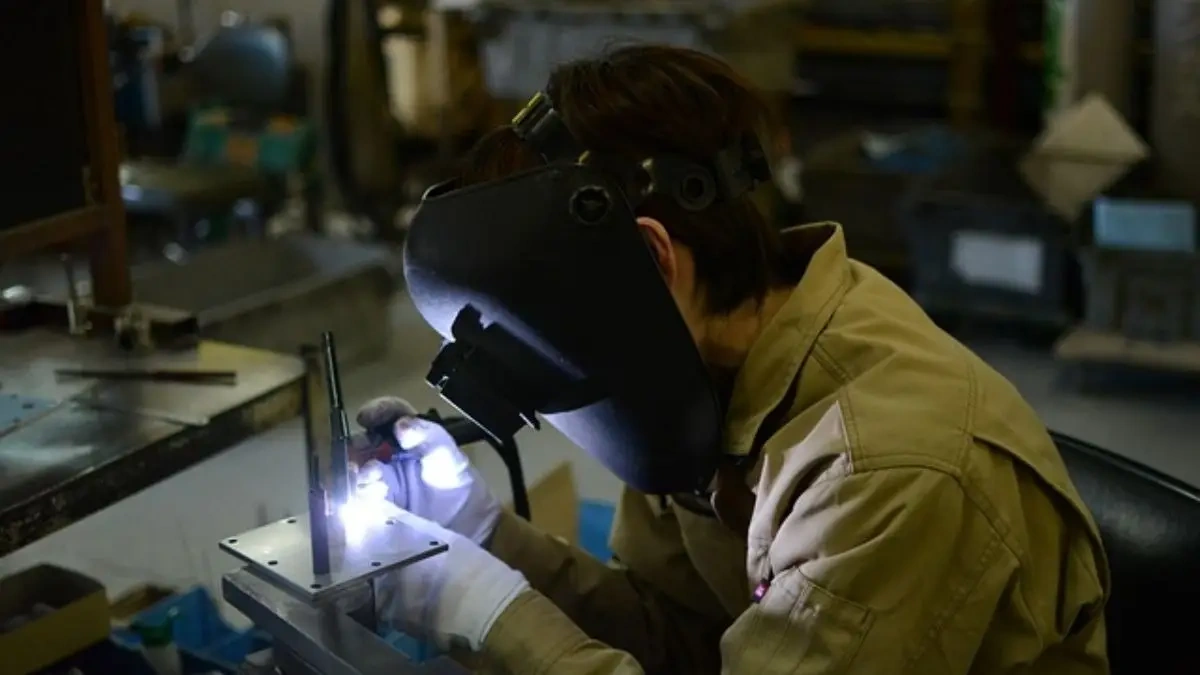
So, what’s the fuss about these measures? Why are they important beyond the press releases and government circulars? It boils down to this: India wants to become a manufacturing powerhouse. Think of countries like China or Germany – places where a significant portion of the economy is driven by making things. And these measures, however dry they might sound, are the building blocks for achieving that.
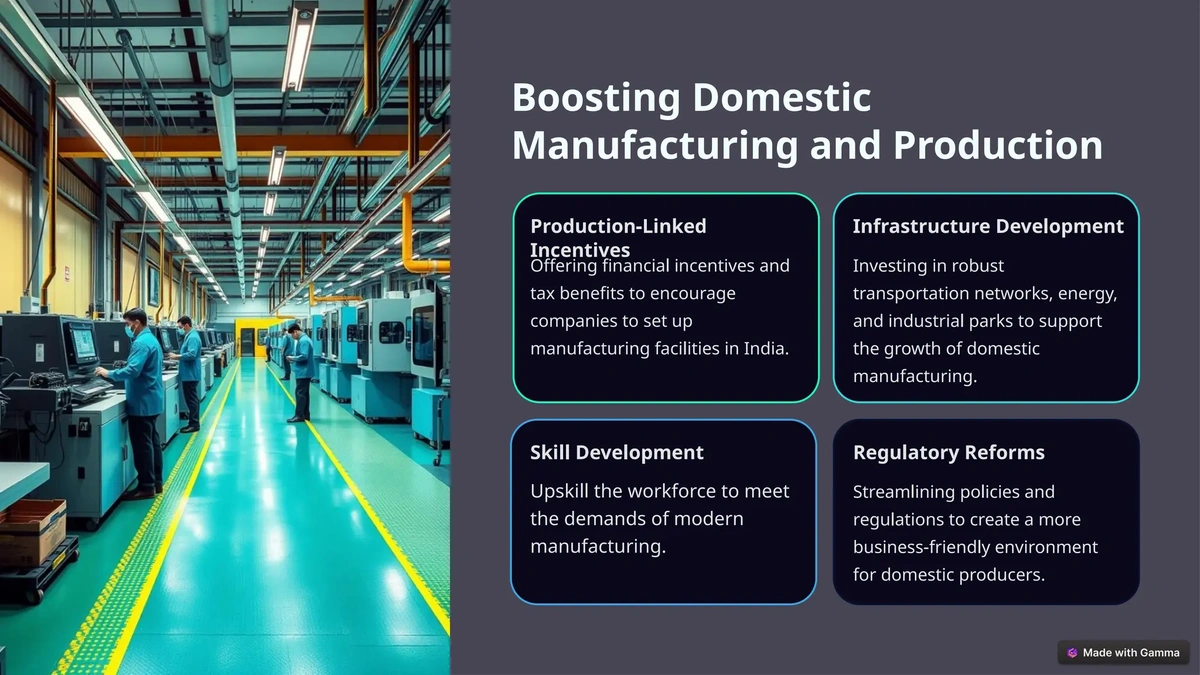
The government’s push for improved infrastructure , streamlined regulations, and incentives for local production is all aimed at creating a more attractive environment for businesses to set up shop – and more importantly, to stay and grow. We’re talking about reducing red tape, making it easier to get permits, and providing financial support to help companies get off the ground. Why? Because when businesses thrive, they create jobs, boost the economy, and ultimately improve the lives of ordinary Indians.
But it’s not just about attracting big multinational corporations. A key part of this strategy is also about supporting small and medium-sized enterprises (SMEs) – the backbone of the Indian economy. By making it easier for these businesses to operate and compete, the government hopes to unlock their potential and drive innovation across the manufacturing sector. And the focus on Skill Development is extremely important to fulfill the requirement of the industries.
Here’s the thing: this isn’t just some theoretical exercise in economics. It has real-world implications for you and me. Think about it: more jobs, better products, and a stronger economy – all thanks to a series of policy changes designed to make it easier to manufacture things in India.
The “How” | Navigating the New Landscape
Okay, so the government is making changes. But how does this actually affect businesses on the ground? What specific measures are being taken to enhance manufacturing competitiveness and ease of doing business?
Well, for starters, there’s a big push towards digital transformation. We’re talking about things like online portals for permits and approvals, electronic filing of documents, and the use of technology to streamline various processes. This is designed to cut down on paperwork, reduce delays, and make it easier for businesses to comply with regulations. But the Government must ensure that the online portals are working properly, and if not, they should be fixed as soon as possible.
And then there are the financial incentives. The government is offering a range of tax breaks, subsidies, and other financial support to encourage local production. This can help companies lower their costs, invest in new equipment, and expand their operations. The Production Linked Incentive (PLI) scheme has been a major factor in boosting electronics manufacturing in the country.
But perhaps the most important aspect of this whole effort is the focus on creating a more transparent and predictable regulatory environment. Businesses need to know the rules of the game, and they need to be confident that those rules won’t change arbitrarily. By reducing uncertainty and creating a level playing field, the government hopes to encourage more investment and innovation in the manufacturing sector. The government is committed to protect Intellectual Property Rights (IPR) and is committed to ensure that Indian manufacturers remain competitive in the global market.
The “Emotional” Angle | A Sense of Pride and Opportunity
Let’s take a pause and think about it from an emotional aspect. This isn’t just about numbers and policies. It’s about the pride of making things in India, of creating jobs for our people, and of building a stronger, more self-reliant economy. It’s about the opportunity to showcase Indian ingenuity and innovation on the world stage.
There’s a certain satisfaction that comes from knowing that something was made in your country, by your people. It’s a sense of ownership and a feeling of connection to something bigger than yourself. And when that “Made in India” label becomes a symbol of quality and innovation, it can inspire a sense of national pride that transcends politics and ideology.
Moreover, this push for Make in India initiative isn’t just about manufacturing. It’s about creating opportunities for young people to learn new skills, start their own businesses, and build a better future for themselves and their families. It’s about fostering a culture of entrepreneurship and innovation that can transform the Indian economy and create a more prosperous society for all.
The Challenges Ahead | A Reality Check
Now, let’s not get carried away. There are still plenty of challenges ahead. India still has a long way to go to catch up with countries like China and Germany in terms of manufacturing output and export competitiveness . The infrastructure needs improvement, the regulatory environment can be simplified further, and the workforce needs more training.
But the government is aware of these challenges, and it’s taking steps to address them. The key is to maintain momentum, stay focused on the long-term goals, and continue to create an environment that is conducive to manufacturing and innovation. The focus should be on creating products for local consumption and products for exports.
What fascinates me is how these seemingly small steps, like streamlining regulations or offering tax breaks, can have such a profound impact on the overall economy. It’s like a chain reaction: one small change leads to another, and before you know it, you’ve created a whole new ecosystem of growth and opportunity. The Government should continue to monitor global trends in advanced manufacturing technologies and encourage manufacturers to adopt new technologies.
The Future is Now | What’s Next?
So, what does the future hold for domestic manufacturing in India? Well, if the government stays on its current course, and if businesses embrace the opportunities that are being created, then the sky’s the limit. We could see India becoming a major manufacturing hub in the years to come, attracting investment from around the world and creating millions of jobs for its citizens.
But it’s not just about the government and businesses. Each one of us can play a role in this transformation. By supporting local businesses, buying Made in India products, and encouraging young people to pursue careers in manufacturing, we can all contribute to building a stronger, more self-reliant economy. I believe in the India growth story and its manufacturing sector, and I want to see India become a manufacturing hub for the world.
FAQ Section
What exactly does “ease of doing business” mean?
It refers to simplifying regulations, reducing red tape, and making it easier for businesses to start, operate, and grow.

How does the government support small businesses in manufacturing?
Through financial incentives, training programs, and access to technology and resources.
What are the biggest challenges facing domestic manufacturing in India?
Infrastructure gaps, regulatory hurdles, and skill shortages are among the key challenges.
How can I support domestic manufacturing as a consumer?
By buying Made in India products and supporting local businesses.
What is the Production Linked Incentive (PLI) scheme?
A scheme that provides financial incentives to companies for increasing their domestic production.
The Indian manufacturing sector is undergoing a big transformation. The government’s commitment to enhance domestic manufacturing capabilities , and ease of doing business, is paving the way for a brighter future. With the right policies, investments, and a healthy dose of optimism, India can become a global manufacturing powerhouse, creating jobs, driving innovation, and improving the lives of its citizens.
Now is the time to believe in the growth story, because the future is now.
Disclaimer: ऊपर दिए गए विचार और सिफारिशें व्यक्तिगत विश्लेषकों या ब्रोकिंग कंपनियों की हैं, न कि "Finance Ghar" की। हम निवेशकों को सलाह देते हैं कि किसी भी निवेश निर्णय लेने से पहले प्रमाणित विशेषज्ञों से परामर्श करें। निवेश में जोखिम होता है और सही जानकारी के बिना निर्णय लेना हानिकारक हो सकता है।