Kotak Mahindra Bank just dropped a bit of a bombshell, didn’t they? A Kotak Bank stock split in the ratio of 1:5. Now, while the initial reaction might be a shrug – after all, you still own the same proportion of the company – trust me, there’s more to it than meets the eye. Let’s be honest, these corporate actions can feel like financial jargon, but they have very real implications for investors, especially us folks here in India.
Why a Stock Split? The Real Reason Behind the Move
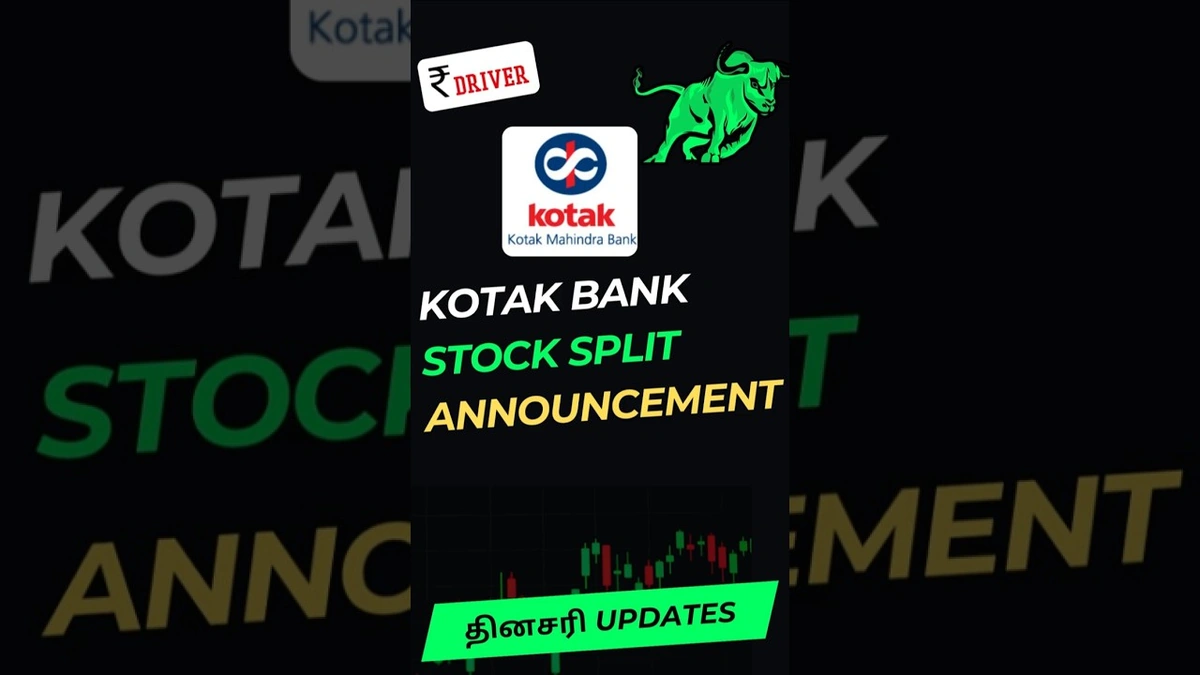
So, why would Kotak Bank even bother with a stock split? Isn’t it just slicing the same pie into smaller pieces? Well, yes and no. Think of it this way: imagine a delicious plate of biryani. If it’s priced too high, fewer people can afford a serving. But if you divide it into smaller, more affordable portions, suddenly a lot more people can enjoy it. That’s essentially what a stock split aims to do – increase liquidity and make the stock more accessible to smaller investors.
Here’s the thing: a high stock price, while seemingly prestigious, can actually deter potential investors. Many retail investors might shy away from a stock trading at ₹2,000 or ₹3,000 per share. A 1:5 split, in theory, would bring the price down to a more palatable level, potentially increasing demand. It makes the entry barrier a little lower. And with more demand, ideally, comes a little bump in the stock price. It’s like creating artificial demand, in a way.
But, it’s not just about attracting retail investors. Splits can also make the stock more attractive for inclusion in major indices. Though, in Kotak’s case, it’s already a significant player. Nevertheless, enhanced liquidity always helps. It’s about making the stock more tradable for everyone. Also, improved shareholder value is achieved when a company undertakes this type of corporate action.
Decoding the 1 |5 Ratio | What It Means for You
Okay, so what does a 1:5 stock split actually mean? Simple: for every one share of Kotak Bank you own, you’ll now have five. The value of your holding remains the same – it’s just distributed across more shares. Let’s say you own 10 shares of Kotak Bank currently trading at ₹2,000 each. After the split, you’ll have 50 shares, and the price per share should adjust to around ₹400 (₹2,000 / 5). See, no real change in your overall investment value.
One thing to keep in mind is that the actual price after the split might not be exactly ₹400. Market forces – supply and demand – will ultimately determine the final price. However, it should be in that ballpark. What fascinates me is how investors react to these things. Sometimes, the mere announcement of a split can cause a short-term rally, driven by speculation and increased interest. Whether that holds true here is something we will just need to wait and watch.
Don’t be surprised if your brokerage account takes a day or two to reflect the changes. It takes a little while for the backend systems to catch up and process the split. You might see some temporary fluctuations in your portfolio value during this period, but don’t panic. It’s all part of the process.
The Potential Impact on Kotak Bank’s Stock Price
This is the million-dollar question, isn’t it? Will the Kotak Bank stock split actually lead to a sustained increase in the stock price? There’s no guaranteed answer, but historical data suggests that stock splits can often provide a short-term boost. But, sustainability depends on the company’s overall performance, market conditions, and investor sentiment. A split alone isn’t a magic bullet.
Here’s my take: the split itself is a positive signal. It indicates that the bank is confident about its future prospects and wants to make its stock more accessible. However, ultimately, the stock price will be driven by earnings, growth, and overall economic factors. So, while the split might generate some initial excitement, long-term success depends on Kotak Bank’s ability to deliver solid financial results.
Consider this: If the market is bearish, even a stock split won’t save the price from falling. Conversely, in a booming market, the split could amplify the upside potential. It’s all relative. And that, friends, is the frustrating – and fascinating – thing about the stock market.
Navigating the Stock Split | A Guide for Indian Investors
So, you are an Indian investor and now what? Here’s what you need to do. Firstly, just relax. You don’t need to do anything proactively. Your brokerage will automatically adjust your holdings to reflect the split. You’ll see more shares in your account, and the price per share will be lower. That’s it.
Secondly, don’t make any rash decisions based solely on the split. A stock split history is not a good predictor of future performance. Evaluate Kotak Bank’s fundamentals, assess your own risk tolerance, and make informed investment decisions. Don’t get caught up in the hype. It’s crucial to also look at the record date . This is the cut-off date set by the company to determine which shareholders are eligible to receive the additional shares from the stock split. Make sure you are a shareholder of record on or before this date.
Thirdly, be mindful of the tax implications. Stock splits themselves are not taxable events. However, when you eventually sell your shares, the capital gains will be calculated based on the adjusted cost basis (the original purchase price divided by five, in this case). Consult with a tax advisor if you have any specific concerns.
What I initially thought was a simple news story turned into a much more nuanced discussion. This stock split is just one piece of the puzzle. It is important to look at other indicators, like the ex-date , and make sure you understand what that means for trading.
Stock Splits vs. Bonus Shares | What’s the Difference?
People often confuse stock splits with bonus shares, but they are not the same thing. While both result in more shares, the underlying mechanisms are different. In a stock split, the company simply divides its existing shares into smaller units. In a bonus issue, the company issues new shares to existing shareholders, typically from its reserves. Bonus shares usually dilute the shareholding.
The key difference is the impact on the company’s reserves. A stock split doesn’t affect the reserves, while a bonus issue reduces them. From an investor’s perspective, the end result is similar – you own more shares. However, the market might perceive bonus issues differently, sometimes viewing them as a sign of financial strength.
Also, it is wise to remember that this news is only relevant to Kotak Mahindra Bank shareholders .
So, there you have it. The Kotak Bank stock split – demystified. It’s a move that could potentially benefit both the company and its investors, but it’s essential to understand the underlying rationale and avoid making impulsive decisions. Remember, investing is a marathon, not a sprint. Stay informed, stay rational, and happy investing!

FAQ | Your Questions About the Kotak Bank Stock Split Answered
What exactly is a stock split?
It’s when a company increases the number of its outstanding shares by dividing each existing share into multiple shares, without changing the total market capitalization.
How does the 1 |5 stock split affect my holdings?
For every one share you own, you’ll receive four additional shares. The price per share will adjust accordingly, so your total investment value remains the same.
When will the stock split take effect?
Check with your brokerage for the exact dates. You can also look to the company’s investor relations page for this detail.
Do I need to do anything to receive the additional shares?
No, your brokerage will automatically handle the split and adjust your holdings.
Is the stock split a taxable event?
No, the split itself is not taxable. However, capital gains taxes will apply when you eventually sell your shares, based on the adjusted cost basis.
Will the stock price definitely go up after the split?
Not necessarily. While stock splits can sometimes provide a short-term boost, the long-term performance depends on various factors, including the company’s financial results and market conditions.
One last thought: Investing in the stock market carries risk. Past performance is not indicative of future results. Consult with a qualified financial advisor before making any investment decisions. Want to read more? Check out RTX TI here. Or maybe, this article about Adani .
Disclaimer: ऊपर दिए गए विचार और सिफारिशें व्यक्तिगत विश्लेषकों या ब्रोकिंग कंपनियों की हैं, न कि "Finance Ghar" की। हम निवेशकों को सलाह देते हैं कि किसी भी निवेश निर्णय लेने से पहले प्रमाणित विशेषज्ञों से परामर्श करें। निवेश में जोखिम होता है और सही जानकारी के बिना निर्णय लेना हानिकारक हो सकता है।