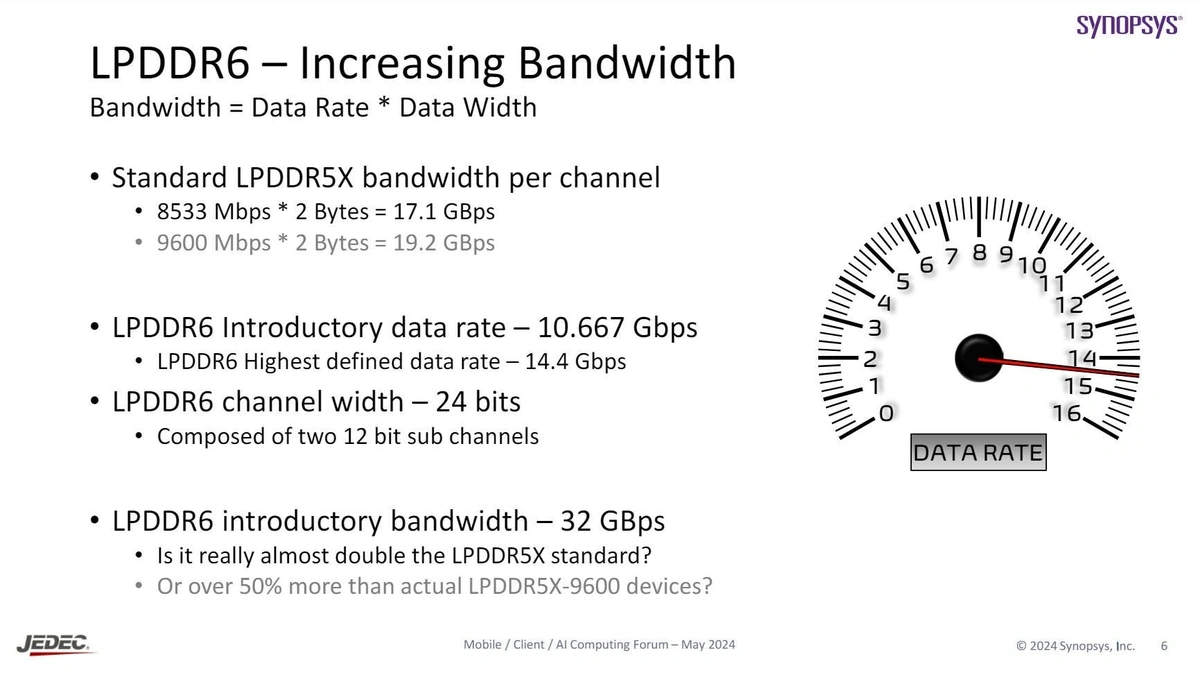
Okay, let’s be honest. When you hear about new types of RAM, your eyes probably glaze over. But trust me, this one’s different. We’re talking about LPDDR6 memory, and it’s not just another incremental upgrade. It’s a fundamental shift that’s going to impact everything from your smartphone’s battery life to the responsiveness of AI applications. So, grab your chai, and let’s dive into why this matters – and why you should care.
The Speed Boost You Can Actually Feel
The first thing everyone wants to know is, how fast is it? Well, imagine your phone loading apps and games nearly twice as fast. That’s the kind of jump we’re talking about. LPDDR6 is designed to offer significantly higher data transfer rates compared to its predecessors, like LPDDR5X . But it’s not just about raw speed. It’s about efficiency.
See, faster memory usually means more power consumption, which translates to shorter battery life. That’s the trade-off, right? Not this time. LPDDR6 is engineered to be incredibly power-efficient, meaning you get a performance boost without sacrificing battery life. That’s a big deal, especially for mobile devices where every milliampere counts. This enhanced power efficiency is achieved through architectural improvements and lower voltage operation, allowing for longer usage times and reduced heat generation. In short, it is a better and improved version of mobile DRAM .
Why Now? The Rise of On-Device AI
Here’s the thing: the need for faster, more efficient memory isn’t just about gaming or streaming videos. It’s being driven by the rise of on-device Artificial Intelligence (AI). Think about it: your phone is increasingly doing things like image recognition, voice processing, and even language translation – all without sending your data to the cloud. This requires a lot of processing power and, crucially, incredibly fast memory access.
And, the requirements from AI models are only increasing. The reason low power DRAM is so important is that AI models are being used in devices that need to be small and light, and run on battery power. Traditional high-powered DRAM is not an option, so LPDDR6 is the perfect fit.
LPDDR6 is designed to handle these workloads more efficiently. It enables faster data processing, allowing AI algorithms to run smoother and more responsively on your device. This means better performance for everything from your camera’s object recognition to your virtual assistant’s voice commands. It’s not just about making your phone faster; it’s about making it smarter.
The Sneaky Power Efficiency Benefits
Let’s drill down on the power efficiency aspect, because it’s genuinely fascinating. The key here is how LPDDR6 manages data. The architecture of LPDDR6 allows data to be accessed and processed with minimal energy expenditure. This is achieved through a combination of factors, including lower voltage operation and optimized data paths. What fascinates me is how it manages to do this without compromising performance. It’s like having a super-efficient engine in your car – you get all the power you need, but you’re not burning through fuel unnecessarily.
One of the most exciting aspects is the potential impact on the Internet of Things (IoT) devices. From smartwatches to sensors, these devices rely on low power consumption to extend their battery life. LPDDR6 could enable a new generation of IoT devices with longer lifespans and more powerful capabilities.

There are several LPDDR6 advantages, including extended use. Imagine having a smartwatch that lasts for days on a single charge, or a sensor that can operate for years without needing a battery replacement. That’s the kind of potential we’re talking about.
When Can You Expect to See It?
Okay, so when are we actually going to see LPDDR6 in our devices? That’s the million-dollar question. While there’s no official launch date yet, industry experts expect to see it appearing in high-end smartphones and other mobile devices within the next year or two. The development and testing phases are already underway, and manufacturers are eager to integrate this new technology into their products. The manufacturers that will be using next gen memory are some of the largest in the world, including Samsung and Apple.
The initial rollout will likely be in flagship devices, but as the technology matures and production costs decrease, it will eventually trickle down to more mainstream devices. So, while you might not see it in your budget phone next year, it’s definitely something to keep an eye on.
Beyond Phones: The Ripple Effect
The impact of LPDDR6 extends far beyond smartphones and tablets. It has the potential to revolutionize other areas as well. Think about virtual reality (VR) and augmented reality (AR) headsets. These devices require extremely fast and efficient memory to deliver immersive and realistic experiences. LPDDR6 could enable a new generation of VR/AR headsets with higher resolution displays, smoother frame rates, and longer battery life. This would enable more realistic AR applications and greater usage in day-to-day life.
And, it is even being looked at for automotive applications. Self-driving cars, for example, rely on a vast amount of data processing to navigate and make decisions. LPDDR6 could help improve the performance and efficiency of these systems, making them safer and more reliable. So, while it might seem like just another tech spec, LPDDR6 has the potential to shape the future of technology in profound ways.
LPDDR6 vs. the Competition: What’s the Real Difference?
So, how does LPDDR6 stack up against other memory technologies? Well, the main advantage is its combination of speed and power efficiency. Compared to older standards like LPDDR5, it offers a significant performance boost without sacrificing battery life. And, compared to other high-performance memory technologies, it’s designed to be more power-efficient, making it ideal for mobile devices. This will result in the improvement of mobile device capabilities.
It’s important to note that other memory technologies, like GDDR6, are optimized for different applications. GDDR6 is typically used in graphics cards and gaming consoles, where raw performance is the top priority. LPDDR6, on the other hand, is designed for mobile devices and other low-power applications. The choice of memory technology depends on the specific requirements of the device. But, where efficiency and low power draw is needed, LPDDR6 comes out on top.
FAQ Section
Will LPDDR6 make my phone noticeably faster?
Yes, you should see a noticeable improvement in app loading times, multitasking, and overall responsiveness.

Will LPDDR6 drain my battery faster?
No, it’s designed to be more power-efficient than previous generations, so you should actually see improved battery life.
When will LPDDR6 phones be available in India?
Expect to see high-end smartphones with LPDDR6 within the next 1-2 years. Keep an eye on flagship releases from major brands.
Is LPDDR6 only for phones?
No, it will also be used in tablets, laptops, VR/AR headsets, and even automotive applications.
What are the different LPDDR6 specifications ?
Specific details are still emerging, but expect higher data transfer rates and lower voltage operation compared to LPDDR5.
So, there you have it. LPDDR6 DRAM isn’t just a spec sheet number; it’s a fundamental shift that’s going to impact everything from your smartphone’s battery life to the responsiveness of AI applications. It’s a technology that’s worth paying attention to, because it’s going to make our devices faster, smarter, and more efficient. And who doesn’t want that?
Disclaimer: ऊपर दिए गए विचार और सिफारिशें व्यक्तिगत विश्लेषकों या ब्रोकिंग कंपनियों की हैं, न कि "Finance Ghar" की। हम निवेशकों को सलाह देते हैं कि किसी भी निवेश निर्णय लेने से पहले प्रमाणित विशेषज्ञों से परामर्श करें। निवेश में जोखिम होता है और सही जानकारी के बिना निर्णय लेना हानिकारक हो सकता है।